
*This post may contain affiliate links for which I earn commissions.*

Two walkers, same weight limit — but they don’t roll the same. One’s got bigger wheels that handle cracks and curbs better. The other feels lighter and easier to move around inside.
At first glance, they look nearly identical. Steel frames. Padded seats. Loop brakes. Both fold up and support up to 350 pounds. But the little differences — wheel size, total weight, seat width — actually matter more than you’d think once you start using them.
If you’ve ever tried pushing a small-wheeled walker on uneven pavement, you know how rough that ride can get. On the other hand, oversized wheels aren’t always ideal in tight spaces, like narrow hallways or small bathrooms. And if lifting it in and out of a trunk is part of your routine, every pound counts.
I’ve put both side by side so you can see where they differ and what type of setup might suit your everyday needs a bit better.
Quick Side-by-Side Specs
Here’s how the two stack up in terms of size, comfort, and basic build. The differences might look small on paper, but they make a big difference when you’re out using it.
| 🔍 Feature | 🛞 Medline Folding Rollator (8″ Wheels) | 🪑 Medline Rollator with Seat (6″ Wheels) |
|---|---|---|
| Weight Capacity | 350 lbs | 350 lbs |
| Frame Material | Steel | Steel |
| Overall Weight | 19 lbs | 16.5 lbs |
| Wheel Size | 8 inches | 6 inches |
| Seat Size | 12″ × 12″ | 12″ × 12″ |
| Backrest | Padded | Padded |
| Brake Style | Loop-style hand brakes | Loop-style hand brakes |
| Handle Height Range | 31″ to 35″ | 31″ to 35″ |
| Price | Higher | Lower |
Medline 350 lb Capacity Steel Folding Walker (8″ Wheels)
This one’s built with a strong steel frame and larger wheels that make a noticeable difference outside. It’s a bit lighter than the other version, and the 8-inch wheels give it better grip and smoother movement over uneven spots — curbs, sidewalk cracks, even gravel.
The padded seat isn’t huge, but it’s firm and gives you a quick place to rest when you need a break. There’s also a basic backrest for support, and the under-seat bag keeps smaller items tucked away. Folding it takes a quick pull at the seat handle, though some users say it takes a few tries to get used to how it unfolds.
Pros and Cons
🟢 What’s good:
- Sturdy steel build with 350-lb capacity
- 8″ wheels roll better on outdoor surfaces
- Lighter than the other model (19 lbs vs 23.5 lbs)
- Seat and backrest offer decent support
- Handle height adjusts between 31″ and 35″
🔴 What could be better:
- Folding takes a firm hand — not the easiest for everyone
- Some users had to guess through the instructions
- Doesn’t lock in place when folded
Medline Steel Walker with Seat (6″ Wheels)
This model’s built for indoor comfort but holds its own outdoors too. It has a burgundy steel frame and supports up to 350 pounds, just like its 8″ sibling — but it’s lighter at 16.5 pounds and a little more compact overall. The 6-inch wheels keep it steady on smooth floors and pavement, though they can feel a bit bumpy over uneven ground.
The padded seat is 12 by 12 inches, and the backrest gives decent support for short rests. To fold it, just lift the seat handle — it closes up without much fuss. The hand brakes also work as locks when pressed down. There’s a roomy zippered bag under the seat too, good for holding things like your phone or keys while walking.
Pros and Cons
🟢 What’s good:
- Strong steel frame with 350-lb weight capacity
- Lightweight build makes it easier to lift and store
- Padded seat and backrest for quick rests
- Adjustable handle height (31″ to 35″)
- 6″ wheels roll smoothly indoors and on light outdoor paths
🔴 What could be better:
- Smaller wheels don’t do well on rough or uneven surfaces
- Basic seat padding — may not be ideal for longer sitting
- No locking clip to keep it folded during transport
Wheel Size, Durability, and Weight Capacity
The biggest difference between these two comes down to the wheels. The Folding Walker uses 8-inch wheels that handle uneven pavement, grass, and sidewalk cracks with less effort. It’s the better pick if you’re out and about often — especially on bumpy or unpredictable surfaces.
The 6-inch wheel model still rolls fine on smooth ground and indoor flooring. It can manage short trips outside, but it’s not built for rougher terrain. It’s a good fit if most of your walking happens indoors or on level paths.
Both use a sturdy steel frame that supports up to 350 pounds, and both feel stable when walking or sitting. The heavier frame adds to that steady feel, though the 6″ version shaves off a few pounds, making it a little easier to lift or fold up.
With regular cleaning and the occasional hardware check, either one can hold up for years. Just wipe it down after wet weather and check the brakes now and then to keep everything moving smoothly.
Folding and Storage
Both walkers fold by lifting the seat handle, which pulls the frame together for easier transport. It’s a simple mechanism, but some users said it takes a bit of getting used to, especially when unfolding it again.
Neither model has a built-in latch to keep it locked when folded, so it might shift open slightly during storage or while lifting. Still, once folded, both fit well in car trunks or tight storage spaces, which helps if you’re short on room.
Warranty Information
Medline backs both models with a limited lifetime warranty on the steel frame. The brakes are covered for five years, while wheels and other wear parts are under a one-year warranty. Just note — normal wear and tear, accidents, or misuse aren’t included. It’s a good idea to keep your receipt in case you ever need to make a claim.
Included Accessories
Each walker includes a zippered storage bag that tucks under the seat. It’s roomy enough to hold your phone, wallet, and other small items you’d rather not carry in hand. If you need more add-ons, accessories like cup holders, cane clips, or oxygen tank holders can be bought separately.
Who Should Choose Each Model?
The Folding Walker with 8″ Wheels might suit you better if:
- You’re often outside and need wheels that handle rougher paths
- Stability on bumpy surfaces is a must
- You don’t mind a few extra pounds for better outdoor use
The 6″ Wheel Walker with Seat could be a better fit if:
- You mostly use it indoors or on smooth sidewalks
- A lighter frame is easier for you to lift and store
- You prefer something simple and compact for everyday use
Price and Value
The 6-inch version tends to cost less, and if you don’t need to deal with uneven terrain often, it’s a solid value. It covers all the basics — stable, foldable, and comfortable for indoor walking — without adding extras that you may not use.
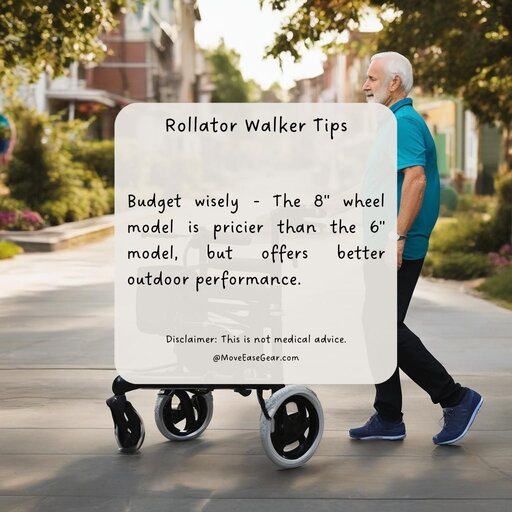
The 8-inch folding version runs a little higher, but that cost goes toward more comfortable handling outside. If you regularly take longer walks or use it on gravel or grass, that smoother ride might be worth the price bump.
Final Thoughts
Both of these Medline walkers support up to 350 pounds and come with the core features most users need — padded seat, storage, easy folding, and strong frames. But the small differences, like how they handle different surfaces or how much they weigh, can make one a better fit depending on how you use it.
If your walks include uneven ground or outdoor errands, the Folding Walker with 8″ wheels gives you more stability. If you mostly stay indoors or prefer something lighter to manage, the 6″ model still delivers solid performance in a simpler frame.
Still weighing your options? You can get the full scoop on each model here:
Or check out more choices on my walker search page if you want to see what else is out there.