
*This post may contain affiliate links for which I earn commissions.*
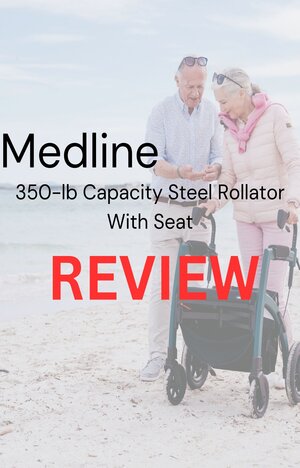
You don’t need anything complicated to stay mobile. The Medline rollator keeps it low-key — and that’s kind of the point. It holds up to 350 pounds, gives you a seat when you need it, and folds down when you’re done. Nothing flashy. Just something that works when you need it to.
I went through all the details and checked what real users had to say — from the braking system and frame width to how it handles uneven ground.
Some folks found it sturdy and simple to fold, while others pointed out problems with the wheels or confusing instructions. Here’s everything laid out clearly so you know what you’re getting into.
What Kind of Rollator Is It?
It’s a four-wheel rollator with a steel frame, a seat, and simple hand brakes. Nothing unusual there. It’s made to give you some extra support when walking — whether you’re moving around the house or heading outside. The frame feels more solid than the lighter models, but you can still fold it up when you’re done using it.
Key Specs:
- Weight capacity: 350 lb
- Walker weight: 19 lb
- Wheel size: 6 inches
- Seat size: 12″ W x 12″ D
- Seat height: 20.5″
- Handle height: Adjustable from 31″ to 35″
- Overall width: 24.5″
- Width between handles: 17.5″
Comfort and Adjustability
The seat is padded and has a small backrest that gives extra support when you sit down. It works fine for most people, but the seat is a bit narrow. Larger users might find it too snug, even if they’re under the 350 lb limit.
The handlebars adjust between 31 and 35 inches, which suits most people under about 5’8″. Taller users might feel like they’re bending forward too much.
The hand grips are shaped for comfort, but some folks said they needed extra padding for longer use.

How It Moves and Folds
The 6-inch rubber wheels roll well on smooth indoor floors and sidewalks. It turns easily around furniture and corners, which makes it great for small spaces.
But it doesn’t do well on bumpy or uneven ground. Grass, gravel, sand, and cracked pavement can cause trouble. Several users reported the wheels struggling—or wearing out quickly—after outdoor use.
Folding is pretty simple—you pull up on the strap under the seat. However, the instructions don’t explain this clearly, and a few users said the strap broke after a while. It doesn’t lock when folded, so it might swing open unless you prop or hold it.
At 19 pounds, it’s not feather-light, but most users can lift it into a trunk or back seat without too much trouble.
Brakes and Safety
It uses standard loop-style brakes: squeeze to slow down, press down to lock. Some people said the brakes worked well, but others had trouble getting them to engage or adjust. The manual doesn’t really help here, and the adjustment instructions are vague.
As with most rollators, you need to lock the brakes before sitting and check them regularly. A couple of users mentioned safety issues, including a front wheel coming off or a brake cable being loose. One user under 240 lb even had a front wheel fail and fall. These seem rare but worth noting.
Shock Absorption
The wheels offer some basic shock absorption, but there’s no dedicated system. It handles indoor bumps okay but feels stiff and shaky on rougher surfaces.
Frame Build and Durability
This walker has a steel frame, which is why it can hold up to 350 lb. That makes it heavier than some aluminum models, but it also feels sturdier.
Most people said the rollator felt solid, but a few mentioned the rubber on the wheels wore out quickly, especially if used outside a lot. One or two even had issues with parts being bent or loose out of the box.
Weather Resistance
It holds up in light rain and everyday use, but leaving it outside for long periods can wear down the metal and rubber. The wheel treads especially may degrade faster when exposed to the elements.
Storage and Accessories
There’s a removable zippered bag under the seat—big enough for a water bottle, keys, or small items. It’s more private than an open wire basket, but not huge.
What’s not included:
- No cup holder
- No cane holder
- No locking clip to keep it folded
Customization and Noise
This one doesn’t come with many extras, but some folks found workarounds — like adding a padded seat cover or attaching a cane holder. Foam grips can help too if the handles feel a bit hard.
The noise? Depends on the surface. Some say it rolls smooth and quiet, others notice rattling when the ground’s uneven. If parts feel loose, a quick tighten-up usually helps.
Setup and Assembly
You don’t need tools to put it together, but that doesn’t mean it’s quick for everyone. A few folks had it ready in ten minutes — others were still sorting it out an hour later.
One common headache? The parts aren’t labeled clearly. The wheels are supposed to show left and right, but often don’t. That tripped up a lot of users and led to some trial-and-error before everything was in the right place.
Still, once it’s all set, most people said it felt steady and did what they needed.
Consumer Ratings
Customer reviews are fairly mixed. Many users like how sturdy the rollator feels and say it helps them stay active. They appreciate the padded seat, storage bag, and foldability. Several commented that it feels safe and turns easily indoors.
But others reported issues, including worn wheels, unclear assembly, and some quality control concerns. A few reviews mentioned damaged parts on arrival, such as bent legs or loose bolts. Taller users often said the handle height didn’t go high enough for comfort.
Overall, most buyers seem happy with it—especially given the price—but there are some warnings that it might not suit everyone.
Pros and Cons
👍 What’s Good
- Strong steel frame supports 350 lb
- Comfortable seat and backrest for short rests
- Good indoor maneuverability
- Easy to fold, fits in trunks
- Under-seat storage bag
- Tool-free assembly
- Budget-friendly price
⚠️ What Could Be Better
- Not ideal for rough terrain or tall users
- Brakes can be stiff or unclear to adjust
- Wheels may wear out quickly outdoors
- No folding lock or cane holder
- Confusing assembly instructions
- No built-in shock absorption
- Noisy on rough surfaces
Warranty and Support
You might not see that warranty info on every product page, but a few users mentioned it in their reviews, so it seems to be pretty common.
As for support, it really varies. Some people got quick help, while others couldn’t get anyone to follow up — especially when they needed replacement parts. Worth checking before you buy, especially if you think you’ll need assistance later on.
Price
This rollator lands in the same price range as many basic steel-frame walkers, which makes it a good fit for tight budgets. Several buyers felt they got solid value for the price, especially since it includes a seat, bag, and higher weight limit.
Still, a few people said they expected better quality. If you’re looking for smoother brakes, longer-lasting wheels, or better outdoor performance, a more expensive model might be worth a look.
Final Thoughts
This rollator keeps things simple, and honestly, that’s what works for a lot of people. It’s sturdy, has a seat when you need to take a break, and folds up when you’re done.
It’s not great on rough ground, and taller users might feel a bit cramped, but if you mostly stay indoors or on smooth paths, it covers the basics without overcomplicating things.
For average-height users who mainly stay on smooth ground, it’s a practical choice that doesn’t cost a fortune.
If you want to compare this one to others with larger wheels or higher weight limits, you can do it over here: Compare rollator walkers.
I have also written a product review about another Medline heavy duty rollator which can support up to 500 lbs that you might want to take a look at, you can read it here.